Tick Checks: How and Where to Check Your Body for Ticks
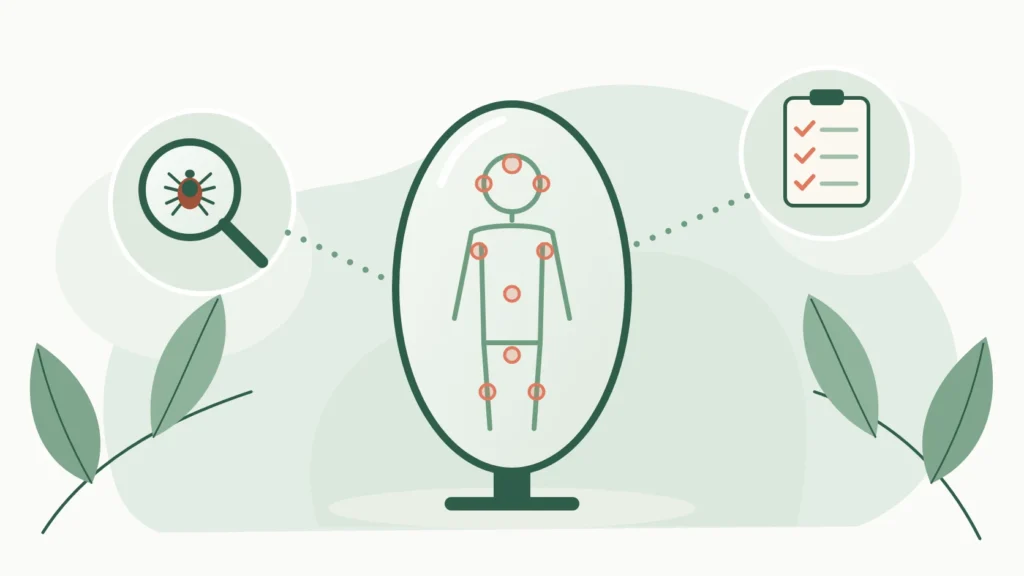
A quick, thorough tick check after time outdoors is one of the simplest ways to lower your risk of Lyme disease. Here’s when to check, where ticks like to hide, and how to check yourself, your family, your clothes, and your pets.
Medical Disclaimer
LymeSearch provides educational information and does not offer medical diagnosis or treatment. If you develop a rash, fever, or other symptoms after a tick bite or time in tick habitat, contact a healthcare professional.
Affiliate disclosure: LymeSearch may earn a commission when readers buy products through some links on our website. Commissions do not determine how we describe the evidence for any supplement or test. Read our Affiliate Disclosure.
Tick checks matter because timing matters. According to the CDC, an infected tick generally has to be attached for more than 24 hours before it can spread the bacteria that cause Lyme disease. If you find and remove a tick within 24 hours, you can greatly reduce your chances of getting Lyme disease.
The challenge is that the ticks most likely to spread Lyme disease are tiny. A daily habit of checking, combined with a shower after coming indoors, makes it much more likely you’ll catch a tick early.
Why Tick Checks Matter
Lyme disease is spread to people through the bites of infected blacklegged ticks, also called deer ticks. In most cases, a tick must stay attached for more than 24 hours before it can pass on the bacteria. That window gives you a real chance to find and remove a tick before it can spread infection.
Many people with Lyme disease never noticed a tick bite. The CDC notes that patients are often unaware of a bite before they get sick. Regular, careful checks help close that gap.
What You’re Looking For
Blacklegged ticks go through several life stages. According to the CDC:
- Nymphs (young ticks) are about the size of a poppy seed. They’re the most common cause of Lyme disease, because they’re abundant and hard to see.
- Adult ticks are about the size of a sesame seed. They can also spread Lyme disease, but they’re more likely to be noticed and removed in time.
Nymphs are most active from April through July, and adults are most active in early spring and fall. A tick that has been feeding gradually swells, so an attached tick may look larger than one that’s just crawling.
Because nymphs are so small, look closely at any new dark speck on your skin.
When to Check
The CDC recommends a full-body check after returning from places where ticks may live, including your own backyard, and checking for ticks daily.
Ticks live in grassy, brushy, or wooded areas. You may pick them up while hiking, camping, gardening, or doing yard work, or while walking through leaf litter or near shrubs. Tick exposure can happen year-round, but ticks are most active during warmer months, from April through September.
Shower Soon After Coming Indoors
According to the CDC, showering within two hours of coming indoors has been shown to reduce your risk of getting Lyme disease. A shower may wash off ticks that haven’t attached yet, and it’s a natural time to do your full-body check.
Showering also means you change out of clothing that may be carrying ticks.
Where Ticks Hide on Your Body
Ticks can attach anywhere, but they prefer warm, hidden areas. The CDC recommends checking these places on yourself and your children:
- In and around the hair
- In and around the ears
- Under the arms
- Inside the belly button
- Around the waist
- Between the legs
- Behind the knees
Pay special attention to children’s hair and scalp, which the CDC singles out for careful checking.
How to Do a Full-Body Tick Check
- Find good light and use a hand-held or full-length mirror so you can see every part of your body.
- Start at your head. Part your hair in sections and check your scalp, hairline, and behind and inside your ears.
- Work your way down. Check your neck, under your arms, your belly button, and around your waistband.
- Check your lower body, including between your legs and behind your knees.
- Ask for help with areas you can’t see well, such as your back and scalp.
- Check children yourself, using the same head-to-toe routine.
A CDC expert recommends exactly this approach: start with the head, check the hair and behind the ears, then move systematically down the body, since ticks tend to crawl toward places like the belly button and armpits.
Check Your Clothes and Gear
Ticks can ride into your home on clothing, coats, and backpacks and attach to someone later. The CDC recommends:
- Checking your clothing and removing any ticks you find.
- Tumble drying clothes on high heat for 10 minutes to kill ticks on dry clothing. Damp clothes may need more time.
- Using hot water if clothes need washing first. Cold and medium-temperature water won’t kill ticks.
- Examining gear such as coats and daypacks.
Wearing light-colored clothing outdoors can make ticks easier to spot before they reach your skin. For ways to keep ticks off in the first place, see our guide to tick repellents.
Check Your Pets
Pets can carry ticks into your home. The CDC suggests checking your pet every day, especially after time outdoors, by running your fingers through its fur with gentle pressure to feel for small bumps. Look especially:
- In and around the ears
- Around the eyelids
- Under the collar
- Under the front legs
- Between the back legs
- Between the toes
- Around the tail
Ask your veterinarian about tick prevention products for your pet.
If You Find a Tick
If a tick is crawling but not attached, remove it and dispose of it. If it’s attached, remove it as soon as possible: grasp the tick with tweezers as close to the skin as you can, and pull it away from the skin with gentle, steady pressure.
Our guide on what to do after a tick bite explains how to remove a tick step by step, what to avoid, and which symptoms to watch for.
See a healthcare provider if you develop a rash, fever, exhaustion, or joint and muscle aches within several weeks of removing a tick or spending time in tick habitat. Mention your tick bite and when it happened.
Frequently Asked Questions
How often should I check for ticks?
The CDC recommends checking daily and after every time you’ve been in places where ticks live, including your own yard.
How long does a tick need to be attached to spread Lyme disease?
In most cases, more than 24 hours, according to the CDC. Removing a tick within 24 hours can greatly reduce your chances of getting Lyme disease.
Can I feel a tick bite?
You may not. Many people with Lyme disease don’t remember being bitten, which is why visual checks matter.
Will washing my clothes kill ticks?
Only in hot water. The CDC says cold and medium-temperature water won’t kill ticks. Tumble drying on high heat for 10 minutes kills ticks on dry clothing.
Do I need to check if I used repellent?
Yes. The CDC recommends daily tick checks in addition to repellents and other precautions.
The Takeaway
A daily head-to-toe tick check, plus a shower within two hours of coming indoors, is one of the easiest ways to catch ticks before they can spread Lyme disease.
Focus on the hidden spots ticks prefer: the hair, ears, armpits, belly button, waist, groin, and backs of the knees. Remember that nymphs can be as small as a poppy seed.
Dry your clothes on high heat, check your gear and pets, and remove any attached tick promptly.
- Centers for Disease Control and Prevention Preventing Tick Bites
- Centers for Disease Control and Prevention How Lyme Disease Spreads
- Centers for Disease Control and Prevention How to Prevent Mosquito and Tick Bites
- Centers for Disease Control and Prevention Lyme Disease: Preventing Lyme Disease in Children (video transcript)
- Centers for Disease Control and Prevention Diseases Spread by Ticks
- Centers for Disease Control and Prevention Understanding Tick Bites and Lyme Disease
- Centers for Disease Control and Prevention How to Check Your Pet for Ticks
These resources provide background on tick checks and Lyme disease prevention. Contact a healthcare professional about symptoms after a tick bite.