How At-Home Lab Tests Work: Ordering, Sample Collection, Results, and What to Compare
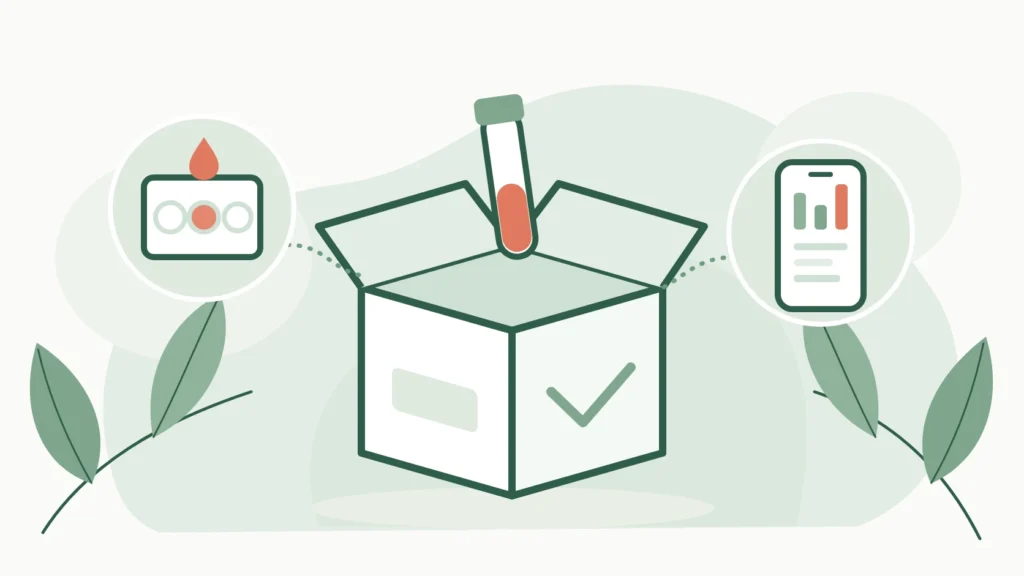
At-home lab tests can make it easier to check certain health markers without a trip to a clinic. Here’s how the process works from ordering to results, and a simple checklist for comparing test companies before you buy.
Medical Disclaimer
LymeSearch provides educational information and does not offer medical diagnosis or treatment. At-home test results are not a substitute for a clinical evaluation. Talk with a qualified healthcare professional about your results and before making health decisions.
Affiliate disclosure: LymeSearch may earn a commission when readers buy products through some links on our website. Commissions do not determine how we describe the evidence for any supplement or test. Read our Affiliate Disclosure.
If you live with long-term symptoms, keeping track of your health can feel like a part-time job. At-home lab tests offer a convenient way to check some health markers on your own schedule, and many people find that helpful.
Not every test is equally useful, though, and the details matter. This guide explains how at-home testing works step by step, what happens to your sample, and what to look for when comparing options.
Two Types of At-Home Tests
“At-home test” can mean two different things. The FDA describes the difference like this:
- Home collection tests: you collect a sample at home and mail it to a laboratory, which runs the test and reports the result. Most at-home tests for vitamins, nutrients, and blood markers work this way.
- Fully at-home tests: you collect the sample, run the test, and read the result yourself, usually within minutes, without sending anything to a lab.
Tests sold directly to consumers without a healthcare provider’s involvement are called direct-to-consumer (DTC) tests. According to the FDA, these generally ask you to collect a sample, such as saliva or urine, and send it to the company for testing. Some measure things like protein levels, toxins in urine, or gut bacteria, and many are genetic tests.
How It Works, Step by Step
1. Choose and order a test
Some home tests can be bought without a prescription. Others need an order from a healthcare provider. With some services, you answer a short online questionnaire so a provider can decide whether to order the test for you.
Availability can also depend on where you live. According to CMS, state laws may limit direct-access testing, so some tests can’t be shipped to every state.
2. Prepare and collect your sample
Your kit will include instructions and supplies. Common sample types include saliva, urine, a swab, or a few drops of blood from a finger prick. Some tests also need preparation, such as fasting before the sample is collected.
The FDA stresses that following the directions carefully matters: if you don’t, the test may not work correctly. Check details such as the time of day to collect, how much sample is needed, and how to label it.
3. Ship it to the lab
Kits typically include packaging for mailing your sample back. Ship it within the time frame the instructions give, and check the company’s policy on what happens if a sample arrives damaged or can’t be tested.
4. The lab runs the test
In the U.S., laboratories that test human samples to provide health information must hold a certificate under the Clinical Laboratory Improvement Amendments (CLIA). CMS says this applies to labs doing direct-access testing for consumers, just as it does for tests ordered by a doctor.
5. Get your results
Results are usually delivered through an online account or app. Federal rules allow you to get your completed test reports directly from a lab, but labs aren’t required to explain what the results mean. Some services include a review by a clinician, and others don’t, so it’s worth checking before you order.
6. Follow up
The FDA advises against making dietary or health-related decisions based on a direct-to-consumer test without first discussing the results with your healthcare provider. Bring a copy of your report to your next appointment. Your provider may confirm a result with another test or look at it alongside your symptoms and history.
FDA Review and CLIA Labs: What They Mean
Two kinds of oversight are easy to mix up:
| What it covers | What it doesn’t guarantee | |
|---|---|---|
| FDA review | For tests it reviews, the FDA looks at whether the test accurately measures what it claims, whether the result is linked to a health condition, and what the company says about the test. | Not every test is reviewed. The FDA generally doesn’t review tests for general wellness or low-risk purposes before they’re sold. |
| CLIA certification | The laboratory meets federal quality standards for running tests. | According to the CDC, CLIA certification doesn’t address whether a specific test is clinically valid. |
The FDA notes that direct-to-consumer tests have varying levels of evidence behind their claims. If a test’s FDA status isn’t clear from the company’s website, it’s reasonable to ask.
What to Compare Before You Buy
Use this checklist to compare at-home test companies side by side:
| Feature | What to look for |
|---|---|
| What’s measured | The exact markers included. Two panels with similar names may test different things. |
| Sample type | Finger-prick blood, saliva, urine, or a swab, and whether you’re comfortable collecting it. |
| Laboratory | Whether the company names its lab and states that it’s CLIA-certified. |
| FDA status | Whether the test or collection kit has FDA marketing authorization, or is offered for general wellness. |
| Clinician involvement | Whether a licensed provider orders the test, reviews results, or contacts you about urgent findings. |
| Results report | Whether results show your values, units, and reference ranges, and whether you can download them to share with your doctor. |
| Total price | The full cost, including shipping, any physician fee, and replacement kits. |
| Turnaround time | How long it takes from when the lab receives your sample to when results are posted. |
| Availability | Whether the test can be shipped to your state. |
| Privacy | How the company stores, uses, and shares your data, and whether you can delete it. |
When At-Home Testing Can Help
At-home testing may be a good fit when:
- You and your provider want to track a specific marker over time.
- Getting to a lab is difficult because of fatigue, distance, or your schedule.
- You’d like to bring baseline numbers to an upcoming appointment.
- The test has a clear purpose, and you know what you’ll do with the result.
For example, some people with long-term symptoms use home tests to check nutrient levels, such as vitamin D, as a starting point for a conversation with their doctor. Keep in mind that testing is most useful when there’s a reason for it, not as a routine response to a Lyme disease diagnosis on its own.
When to See a Provider Instead
- Urgent or severe symptoms: seek medical care right away rather than waiting for a mailed test.
- Suspected Lyme disease: CDC-hosted guidance does not recommend over-the-counter Lyme sample collection kits. Read our guide to Lyme disease tests.
- Treatment decisions: the FDA says direct-to-consumer tests shouldn’t be used to determine treatments.
- Ongoing monitoring of a condition or medication: your provider may need specific lab methods or timing.
The FDA reminds consumers that direct-to-consumer tests are not a substitute for a traditional health care evaluation, including recommended screenings and visits to your provider.
Frequently Asked Questions
Are at-home lab tests as accurate as tests at a doctor’s office?
It depends on the test, the sample type, and how carefully the sample is collected. Home collection tests are run in a laboratory, but the FDA notes that not following directions can stop a test from working correctly. Ask the company how its results compare with standard lab testing.
Do I need a prescription for an at-home lab test?
Not always. Some tests are sold directly to consumers, while others require an order from a healthcare provider, sometimes arranged through the testing company.
Can I share my results with my doctor?
Yes. Download or print your report, including units and reference ranges, and bring it to your appointment.
Why are some tests unavailable in my state?
CMS notes that state laws may regulate who can order a lab test and receive results, which can limit direct-access testing in some states.
Can an at-home test diagnose Lyme disease?
CDC-hosted guidance does not recommend over-the-counter Lyme sample collection kits. The recommended approach is an FDA-cleared two-step blood test ordered through a healthcare provider.
The Takeaway
Most at-home lab tests work by collecting a small sample at home and mailing it to a certified laboratory, with results delivered online.
Before you buy, compare what’s measured, the sample type, the lab, FDA status, clinician support, total price, and turnaround time. Follow the instructions carefully, and review your results with a healthcare provider before making changes.
Explore more options on our At-Home Testing hub.
- U.S. Food and Drug Administration Direct-to-Consumer Tests
- U.S. Food and Drug Administration A Closer Look at COVID-19 Diagnostic Testing (home collection vs. at-home tests)
- Centers for Medicare & Medicaid Services Direct Access Testing (DAT) and the CLIA Regulations
- Centers for Medicare & Medicaid Services HHS Finalizes Patients’ Right to Access Report of Clinical Laboratory Test Results
- CDC Morbidity and Mortality Weekly Report Concerns Regarding a New Culture Method for Borrelia burgdorferi (CLIA certification vs. FDA clearance)
- Centers for Disease Control and Prevention Ready? Set? Test! Patient Testing Is Important. Get the Right Results.
- Association of Public Health Laboratories (hosted by CDC) Suggested Reporting Language, Interpretation and Guidance Regarding Lyme Disease Serologic Test Results (April 2024)
These resources provide background on at-home testing and laboratory oversight. Talk with a healthcare professional about which tests are right for you.