Chronic Inflammation and Lyme Disease: What the Research Shows
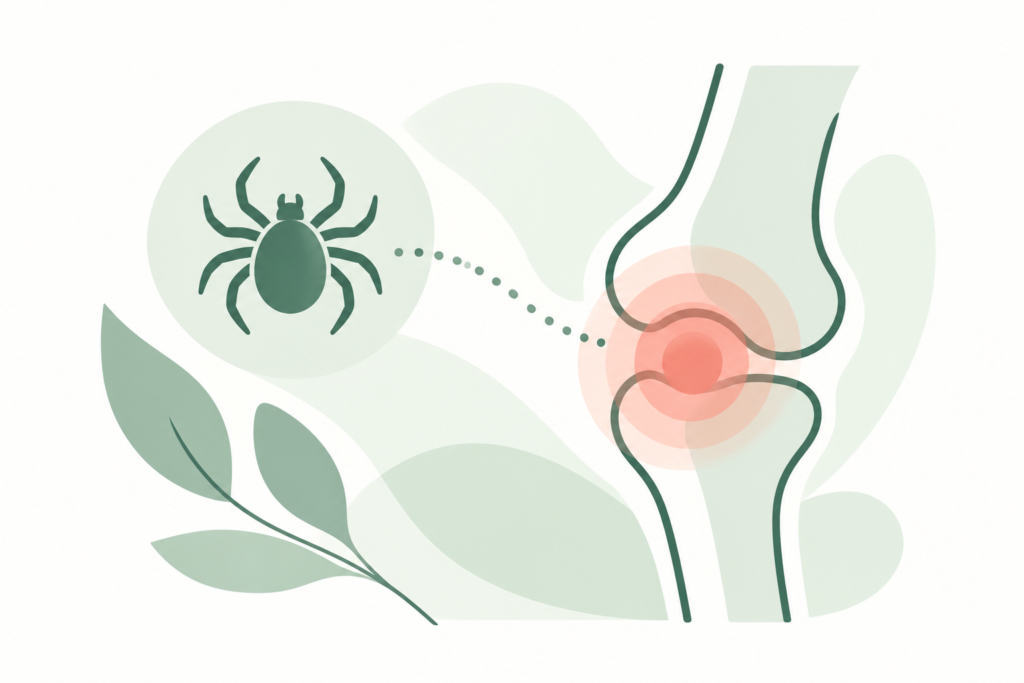
Chronic inflammation and Lyme disease are connected through the body’s immune response to infection. In some people, joint inflammation continues after the infection has been treated. This is best documented in Lyme arthritis. For lasting fatigue, aches, or difficulty thinking, researchers do not yet know whether inflammation is responsible.
Affiliate disclosure: LymeSearch may earn a commission when readers buy products through some links on our website. Commissions do not determine how we describe the evidence for any supplement or test. Read our Affiliate Disclosure.
What is inflammation?
Inflammation is your immune system’s response to infection, injury, or irritation. Immune cells release chemical signals that help fight germs and begin the healing process. [1]
You may recognize inflammation when a cut becomes red, swollen, warm, or painful. However, inflammation also occurs inside the body, where it may not produce visible symptoms.
In a healthy immune response, inflammation decreases once the underlying problem has been addressed. When inflammatory activity continues or becomes excessive, it can contribute to tissue damage and persistent symptoms.
What is the difference between acute and chronic inflammation?
Acute inflammation develops relatively quickly in response to an injury or infection. It is usually temporary and helps the body respond to an immediate threat.
Chronic inflammation refers to inflammatory activity that continues over an extended period. Depending on its cause and location, it may persist for months or years. [1]
However, symptoms that continue for months are not automatically evidence of chronic inflammation. Fatigue, pain, and difficulty concentrating can have several possible causes.
Determining whether inflammation is present requires consideration of symptoms, medical history, physical examination, and sometimes laboratory testing.
How does Lyme disease trigger inflammation?
Lyme disease is a bacterial infection caused by certain species of Borrelia bacteria. These bacteria are transmitted to humans through infected tick bites.
When the bacteria enter the body, the immune system recognizes components of the organism and begins responding.
This response involves two major parts of the immune system.
- Innate immunity. The body’s early immune response recognizes bacterial components and releases inflammatory signals.
- Adaptive immunity. The immune system develops more targeted responses, including antibodies against Borrelia. [2]
These immune responses help control infection but can also contribute to symptoms such as fever, muscle aches, and joint inflammation.
Most people recover after recommended antibiotic treatment. In some cases, however, inflammatory problems can continue after treatment.
Can Lyme disease cause chronic inflammation?
Yes. Lyme disease can lead to persistent inflammation in certain circumstances. The clearest example is Lyme arthritis, which affects the joints. [3]
Some people continue experiencing joint inflammation after completing appropriate antibiotic treatment. Researchers have identified several possible immune mechanisms that may contribute to this response.
However, evidence from Lyme arthritis should not automatically be applied to every symptom that persists after Lyme disease.
| Condition | What is known |
|---|---|
| Active Lyme disease | Bacterial infection triggers immune and inflammatory responses. |
| Post-antibiotic Lyme arthritis | Joint inflammation can persist after appropriate antibiotic treatment. |
| Persistent symptoms after treatment | Fatigue, pain, or cognitive difficulties may continue, but their causes are not fully understood. |
What is Lyme arthritis?
Lyme arthritis is an inflammatory joint condition associated with Lyme disease. It commonly affects one or a few large joints, especially the knee. [4]
Symptoms may include noticeable swelling, stiffness, warmth, and discomfort when moving the affected joint.
Joint swelling may develop weeks or months after the original infection, particularly when Lyme disease was not recognized and treated earlier.
Most patients respond to recommended antibiotic treatment. However, some continue to experience inflammatory joint swelling after antibiotics.
Persistent joint swelling should be evaluated by a healthcare professional. Other conditions, including bacterial joint infections, can cause similar symptoms and may require urgent care.
Why can inflammation continue after antibiotics?
Researchers are investigating why joint inflammation sometimes persists after appropriate antibiotic treatment.
One possibility involves bacterial components that remain in joint tissue after the infection has been treated.
A 2019 study identified Borrelia peptidoglycan, a component of the bacterial cell wall, in joint fluid from patients with Lyme arthritis. [5]
Researchers have proposed that these bacterial components may contribute to continued immune activation in some patients.
Importantly, detecting bacterial fragments does not establish that living bacteria remain.
Other proposed mechanisms include prolonged inflammatory signaling, autoimmune responses, and changes in the joint lining. [3]
The term post-antibiotic Lyme arthritis is used to describe persistent joint inflammation after appropriate antibiotic treatment.
What if joint swelling continues after treatment?
Persistent joint swelling requires reassessment to determine whether additional treatment is necessary.
Clinical decisions depend on the initial treatment, degree of improvement, and examination findings.
Depending on the situation, management may involve additional antibiotics, monitoring, or referral to a rheumatologist. [6]
For patients with persistent inflammation after appropriate antibiotic therapy, treatment may focus on controlling the inflammatory response.
Patients should discuss ongoing swelling with their healthcare professional rather than independently extending antibiotics.
What about fatigue, pain, and brain fog after treatment?
Some people experience persistent symptoms after completing recommended treatment for Lyme disease.
These symptoms may include significant fatigue, widespread discomfort, difficulty concentrating, and problems with memory. [7]
When symptoms meet specific research criteria, they may be classified as post-treatment Lyme disease syndrome, or PTLDS.
Researchers continue investigating the mechanisms responsible for persistent symptoms.
Possible explanations under study include immune changes and other physiological processes. However, no single explanation has been established for everyone.
Persistent fatigue or cognitive symptoms do not necessarily demonstrate ongoing infection or chronic inflammation.
For additional information, read our guide to Lyme disease fatigue .
Do additional antibiotics help persistent symptoms?
Researchers have studied whether prolonged antibiotic treatment improves persistent symptoms after recommended Lyme disease therapy.
A 2024 systematic review found that additional antibiotics did not demonstrate consistent overall benefits for quality of life, cognitive function, or depression. Results for fatigue were mixed. [8]
The review also identified increased adverse events associated with antibiotic treatment.
Current clinical guidelines do not recommend additional antibiotic therapy solely for persistent nonspecific symptoms when there is no objective evidence of reinfection or treatment failure. [6]
Persistent symptoms still deserve medical evaluation and appropriate symptom management.
Can blood tests detect chronic inflammation?
Certain blood tests can provide information about inflammatory activity in the body.
However, these tests cannot independently establish that Lyme disease is responsible.
C-reactive protein (CRP)
CRP is a protein produced by the liver in response to inflammation.
Elevated CRP levels can occur with infections, autoimmune conditions, and other inflammatory processes. [9]
Erythrocyte sedimentation rate (ESR)
ESR measures how quickly red blood cells settle in a laboratory sample.
An elevated ESR can suggest inflammation but does not identify its cause. [10]
Lyme antibody testing
Standard Lyme disease blood tests detect antibodies produced in response to Borrelia bacteria.
Antibodies may remain detectable for months or years after infection. Therefore, a positive antibody test does not necessarily indicate an active infection. [2]
Healthcare professionals interpret laboratory results alongside symptoms, examination findings, and medical history.
How is Lyme-related inflammation managed?
Treatment depends on the underlying condition and whether active infection is present.
Antibiotic treatment
Active Lyme disease is treated with recommended antibiotics.
Common medications include doxycycline, amoxicillin, and cefuroxime axetil. The appropriate treatment depends on the clinical presentation. [11]
Anti-inflammatory treatment
For certain patients with persistent joint inflammation after appropriate antibiotics, healthcare professionals may recommend treatments that address the inflammatory response.
Nonsteroidal anti-inflammatory drugs, or NSAIDs, may help reduce pain and inflammation in appropriate circumstances.
However, these medications can cause adverse effects, including gastrointestinal bleeding and kidney problems. [12]
Treatment decisions should be individualized with a healthcare professional.
What can help manage symptoms day to day?
Several everyday strategies may support general health and symptom management.
These approaches do not replace recommended treatment for active Lyme disease.
Sleep
Maintaining consistent sleep and wake times may support sleep quality and daily functioning.
Keeping the bedroom dark, limiting caffeine near bedtime, and maintaining a regular sleep routine may also help. [13]
Activity pacing
Some people experience worsening symptoms after physical or mental exertion.
When post-exertional malaise is present, balancing activity with adequate rest may help reduce symptom flare-ups. [14]
Nutrition
A balanced diet supports normal immune function and general health.
Eating a variety of vegetables, fruits, whole grains, and protein-rich foods can help meet nutritional needs. [15]
No specific diet has been established as a treatment for Lyme disease.
Can supplements help with inflammation?
Some dietary supplements have been studied for inflammatory conditions.
However, findings from other conditions cannot automatically be applied to Lyme disease.
Curcumin
Curcumin is a compound found in turmeric.
Research has investigated curcumin for several inflammatory conditions, including osteoarthritis.
Some studies report improvements in symptoms, although study quality and results vary. [16]
These findings do not establish that curcumin treats Lyme arthritis or PTLDS.
Curcumin supplements can cause adverse effects, and certain formulations have been associated with liver injury.
Omega-3 fatty acids
Omega-3 fatty acids are found in foods such as fatty fish and in dietary supplements.
Researchers have studied omega-3 supplementation for several inflammatory conditions, with varying results. [17]
Evidence has not established that omega-3 supplements treat Lyme-related inflammation.
Choosing supplements carefully
Before purchasing a supplement, consider whether research supports its use for your particular symptoms.
Discuss potential interactions with medications and existing health conditions with a healthcare professional.
Supplements have not been shown to cure Lyme disease and should never replace recommended antibiotic treatment. [18]
Explore our Lyme disease supplements guide for additional information about ingredients, research, and safety considerations.
When should you seek medical care?
Seek medical evaluation if you develop symptoms consistent with Lyme disease after possible tick exposure.
Symptoms may include an expanding rash, fever, fatigue, headache, and muscle aches. [19]
A Lyme disease rash does not always have a bull’s-eye appearance.
New joint swelling, facial weakness, neurological symptoms, or an irregular heartbeat also warrant prompt assessment.
If symptoms continue after treatment, arrange a follow-up appointment to discuss possible causes and symptom management.
Seek emergency care for severe chest pain, severe breathing difficulty, fainting, or sudden neurological symptoms.
The takeaway
Chronic inflammation and Lyme disease are connected through the body’s immune response to infection.
The strongest evidence for inflammation continuing after treatment comes from Lyme arthritis, where joint inflammation may persist despite appropriate antibiotic therapy.
Persistent symptoms such as fatigue, pain, and difficulty concentrating are more complex, and their underlying causes remain under investigation.
Understanding the available evidence can help patients discuss appropriate testing, treatment, and symptom management with healthcare professionals.
References
- National Institute of Environmental Health Sciences: Inflammation
- CDC: Clinical Testing and Diagnosis for Lyme Disease
- Lochhead RB, et al. Lyme arthritis: linking infection, inflammation and autoimmunity. Nature Reviews Rheumatology. 2021.
- CDC: Clinical Care and Treatment of Lyme Arthritis
- Jutras BL, et al. Borrelia burgdorferi peptidoglycan is a persistent antigen in patients with Lyme arthritis. PNAS. 2019.
- AAN/ACR/IDSA Guidelines for the Prevention, Diagnosis and Treatment of Lyme Disease
- CDC: Chronic Symptoms and Lyme Disease
- Dersch R, et al. Treatment of post-treatment Lyme disease symptoms: a systematic review. European Journal of Neurology. 2024.
- MedlinePlus: C-Reactive Protein Test
- MedlinePlus: Erythrocyte Sedimentation Rate
- CDC: Treatment and Intervention for Lyme Disease
- MedlinePlus: Ibuprofen
- NHLBI: Healthy Sleep Habits
- CDC: Managing Symptoms and Preventing Worsening
- USDA: MyPlate
- NCCIH: Turmeric
- NCCIH: Omega-3 Supplements
- NCCIH: Lyme Disease
- CDC: Signs and Symptoms of Untreated Lyme Disease