Lyme Disease Fatigue: Causes, Symptoms, and How to Manage It
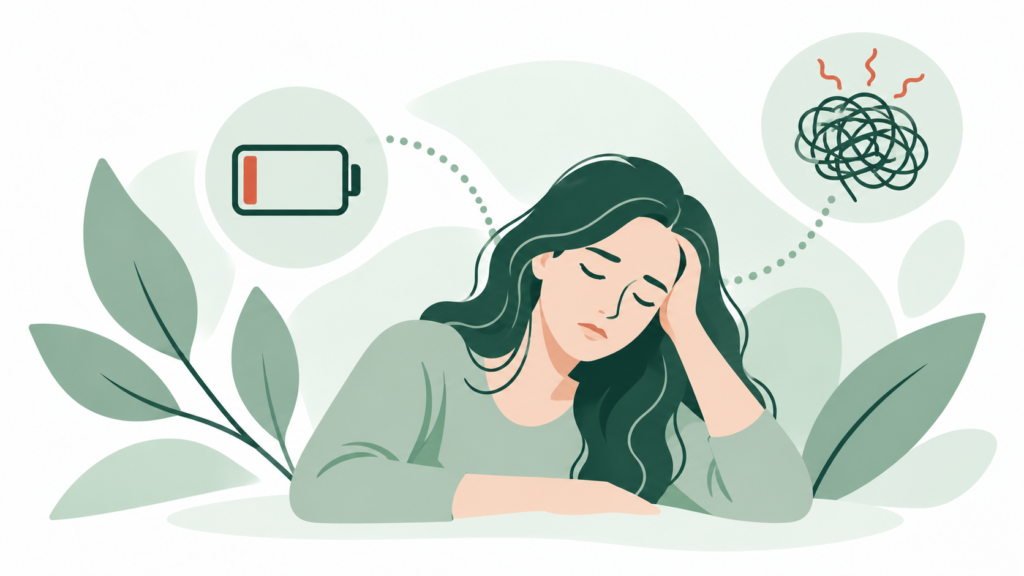
Lyme disease can cause exhaustion that goes beyond ordinary tiredness. Some people feel better after treatment, while others continue experiencing fatigue for months or longer. Researchers are still investigating why these symptoms sometimes persist.
Affiliate disclosure: LymeSearch may earn a commission when readers buy products through some links on our website. Commissions do not determine how we describe the evidence for any supplement or test. Read our Affiliate Disclosure.
This guide explains what Lyme disease fatigue feels like, why it happens, what researchers know about persistent symptoms, and what may help you manage them. It also explores nutritional deficiencies and supplements that may be relevant to fatigue.
What is Lyme disease fatigue?
Fatigue is a lack of physical or mental energy. It is different from sleepiness, which is the feeling that you need to sleep. Someone experiencing fatigue may feel exhausted even after getting enough rest. [1]
Fatigue is a recognized symptom of Lyme disease. It commonly appears during early infection alongside fever, headache, muscle aches, and joint pain. [2]
Some people continue experiencing fatigue after completing recommended antibiotic treatment. The Centers for Disease Control and Prevention (CDC) recognizes that prolonged symptoms can occur following Lyme disease. [3]
Fatigue alone cannot establish whether Lyme disease is responsible. Other medical conditions can cause similar symptoms, which makes a proper evaluation important.
What does Lyme fatigue feel like?
People experience Lyme-related fatigue differently. Some describe feeling physically drained, while others struggle with concentration or mental exhaustion. Symptoms may also change from day to day.
Common experiences include:
- Persistent exhaustion. Feeling tired even after a full night’s sleep.
- Physical heaviness. Everyday tasks may require more effort than usual.
- Mental fatigue. Difficulty concentrating, remembering information, or following conversations.
- Reduced activity tolerance. Physical or mental effort may worsen symptoms.
- Unrefreshing sleep. Waking up without feeling rested.
Some people also experience post-exertional malaise (PEM). This means symptoms become worse after physical or mental activity. The worsening can occur hours or even a day or two afterward. [4]
PEM is not unique to Lyme disease. It is also an important feature of conditions such as myalgic encephalomyelitis/chronic fatigue syndrome (ME/CFS).
Why does Lyme disease cause fatigue?
The explanation depends partly on whether fatigue occurs during an active infection or continues after treatment.
During an active infection
Lyme disease is caused by Borrelia bacteria transmitted through the bite of an infected tick. When these bacteria enter the body, the immune system responds to the infection.
This response involves inflammatory signals that help the body fight infection. The same processes can contribute to symptoms such as fatigue, fever, and muscle aches.
Fatigue can also occur with other tick-borne infections, including anaplasmosis and babesiosis. These conditions may require different testing and treatment.
After antibiotic treatment
Researchers do not yet know why some people experience prolonged fatigue after completing recommended treatment. [3]
Several possible explanations are being studied, including changes in immune activity, effects of the original infection, and mechanisms shared with other post-infectious illnesses.
These remain areas of investigation. No single mechanism has been established as the explanation for all cases of persistent fatigue.
For more information about the immune response, read our guide to chronic inflammation and Lyme disease.
Can fatigue continue after treatment?
Yes. Some people experience fatigue, body aches, or difficulty thinking after completing recommended antibiotic treatment for Lyme disease. [3]
When symptoms meet certain criteria, the condition may be described as post-treatment Lyme disease syndrome, or PTLDS.
Research definitions generally involve a documented Lyme infection, recommended treatment, symptoms that persist afterward, and the absence of another condition that adequately explains them.
The term describes a pattern of symptoms. It does not establish why those symptoms continue.
Do more antibiotics help?
Clinical trials have not demonstrated consistent overall benefits from prolonged antibiotic treatment for persistent nonspecific symptoms following recommended Lyme disease therapy.
A 2024 systematic review found no clear overall improvement in several important outcomes. Results for fatigue were mixed, and adverse effects were more common with additional antibiotics. [5]
Current IDSA/AAN/ACR guidelines recommend against additional antibiotics for persistent nonspecific symptoms when there is no objective evidence of reinfection or treatment failure. [6]
New joint swelling, neurological findings, or other signs of active disease require medical evaluation because treatment recommendations may differ.
How is Lyme fatigue different from ordinary tiredness?
Ordinary tiredness often improves with sleep or a period of rest. Fatigue associated with illness may continue despite adequate rest.
| Feature | Ordinary tiredness | Illness-related fatigue |
|---|---|---|
| Rest | Usually helps | May not fully help |
| Duration | Often temporary | May last weeks or longer |
| Activity | Recovery usually follows rest | Symptoms may worsen after exertion |
| Concentration | Usually improves after rest | May remain difficult |
| Daily life | Usually mildly affected | May be significantly disrupted |
These differences are general. Fatigue caused by anemia, thyroid disease, sleep disorders, or other illnesses may feel similar. Symptoms alone cannot identify the cause.
How long does Lyme fatigue last?
There is no single recovery timeline. Many people improve following recommended treatment, while others continue experiencing fatigue or other symptoms for months or longer.
Researchers have not established a reliable method for predicting how long persistent symptoms will last for an individual.
If fatigue continues, becomes worse, or interferes with everyday activities, a healthcare professional can investigate other possible causes.
What can help manage Lyme fatigue?
There is currently no established treatment that reliably eliminates persistent fatigue following Lyme disease.
However, several approaches may help people manage symptoms and improve daily functioning.
Check for other treatable conditions
Fatigue can have several contributing causes. Depending on symptoms and medical history, a healthcare professional may evaluate anemia, thyroid function, nutritional deficiencies, medication effects, or sleep disorders. [1]
Balance activity and rest
Pacing involves managing activity to reduce symptom flare-ups. It is particularly relevant when exertion causes delayed worsening.
The CDC recommends pacing for people with ME/CFS who experience post-exertional malaise. Similar approaches may be useful for people with comparable symptoms after Lyme disease, although this has not been established as a specific PTLDS treatment. [4]
Protect your sleep
Maintaining consistent sleep and wake times, reducing caffeine near bedtime, and keeping the bedroom quiet and dark may support healthier sleep. [7]
Persistent sleep problems should be evaluated, particularly when symptoms suggest sleep apnea or another sleep disorder.
Keep a symptom diary
Recording fatigue, sleep, physical activity, and symptom changes may help identify patterns. It can also provide useful information during medical appointments.
Adjust physical activity
Activity should be adapted to individual tolerance. People who experience post-exertional malaise should avoid exercise programs that repeatedly trigger symptom crashes.
Address other disruptive symptoms
Pain, dizziness, sleep problems, and mood symptoms may contribute to reduced functioning. Treating these problems may improve quality of life even when the cause of persistent fatigue remains uncertain.
Can nutritional deficiencies contribute to fatigue?
Yes. Certain nutritional deficiencies can cause fatigue independently of Lyme disease. Identifying and correcting these deficiencies may improve symptoms when they are contributing to exhaustion.
Iron deficiency is one example. Iron is needed for normal red blood cell function and oxygen transport. Low iron stores can contribute to fatigue, sometimes even without anemia.
Vitamin B12 deficiency can also cause fatigue, weakness, and neurological symptoms. Vitamin D deficiency may contribute to health problems, although its relationship with fatigue is less clear.
Testing should be based on symptoms, medical history, risk factors, and a healthcare professional’s assessment. Not everyone needs every vitamin test.
Can supplements help with Lyme disease fatigue?
Supplements may be useful when a nutritional deficiency is contributing to fatigue. Correcting that deficiency can support normal body function and may improve symptoms related to inadequate nutrient levels.
However, supplements have not been established as treatments for Lyme disease or PTLDS. Evidence from studies involving nutritional deficiencies cannot automatically be applied to Lyme-related fatigue.
Iron
Iron supports red blood cell production and oxygen transport. Iron deficiency can cause fatigue even when anemia is not present.
A 2018 systematic review of randomized controlled trials found that iron supplementation reduced self-reported fatigue in iron-deficient adults without anemia. The review did not establish improvements in measured physical capacity. [8]
These findings suggest that correcting iron deficiency may help certain people experiencing fatigue. They do not show that iron supplements specifically treat Lyme-related fatigue.
Iron supplementation should be guided by medical assessment because excess iron can be harmful.
Vitamin B12
Vitamin B12 supports normal red blood cell production and nervous system function. Deficiency can cause fatigue, weakness, cognitive difficulties, and neurological symptoms.
Correcting B12 deficiency may improve symptoms caused by inadequate B12. Treatment may involve oral supplements or injections depending on the cause and severity of the deficiency. [9]
Taking additional B12 has not been shown to increase energy in people who already have adequate levels.
Vitamin D
Vitamin D supports normal muscle function and several processes involved in maintaining health.
A randomized controlled trial involving 120 adults with vitamin D deficiency found improvements in self-reported fatigue following supplementation. [10]
However, evidence for improving fatigue is mixed. The study did not specifically involve people with Lyme disease. Correcting vitamin D deficiency should not be presented as a proven treatment for PTLDS fatigue.
Comparing nutrients associated with fatigue
| Nutrient | When it may help | Important consideration |
|---|---|---|
| Iron | When iron deficiency contributes to fatigue | Excess iron can be harmful |
| Vitamin B12 | When B12 deficiency causes symptoms | Extra B12 is not a proven energy booster |
| Vitamin D | When deficiency requires correction | Evidence for fatigue improvement is mixed |
The most useful supplement depends on individual nutritional needs. A product that helps someone with a deficiency may provide no additional benefit to someone whose nutrient levels are already adequate.
Our Lyme disease supplements guide explores commonly discussed nutrients, the evidence behind them, safety considerations, and how to evaluate supplement quality.
How should I evaluate supplements?
Supplement quality and suitability matter. Before choosing a product, consider whether you have a medical reason to take it and whether the proposed benefit is supported by research.
Questions worth asking include:
- Do I have a confirmed deficiency or another appropriate reason to take this supplement?
- Has the ingredient been studied in people with a similar condition?
- Is there evidence of improved symptoms or daily functioning?
- Is the dose appropriate for my individual needs?
- Could it interact with medications or existing health conditions?
- Has the product undergone independent quality testing?
Supplements can interact with medications and may cause adverse effects. Discuss new supplements with a healthcare professional or pharmacist.
Important: Supplements do not treat the bacterial infection responsible for Lyme disease and should not replace recommended antibiotic treatment.
When should I see a doctor?
Seek medical evaluation if fatigue continues despite adequate rest, becomes worse, or significantly affects everyday activities.
You should also discuss fatigue accompanied by unexplained weight loss, persistent fever, new joint swelling, or neurological symptoms.
If you have recently experienced a possible tick bite, tell your healthcare professional about the exposure and any new symptoms.
Seek urgent medical attention for a severe headache with neck stiffness, new facial weakness, or concerning heart palpitations.
Call emergency services for chest pain, severe difficulty breathing, fainting with concerning symptoms, or sudden weakness or difficulty speaking.
The takeaway
Fatigue is a recognized symptom of Lyme disease. Although many people improve following recommended treatment, some experience prolonged exhaustion that researchers do not yet fully understand.
Identifying other treatable causes, managing activity, improving sleep, and addressing disruptive symptoms may help. When nutritional deficiencies contribute to fatigue, correcting them may also provide benefits.
Supplements have not been proven to treat Lyme disease or PTLDS itself. Understanding what the evidence supports can help you make informed decisions with your healthcare professional.
References
- MedlinePlus: Fatigue
- CDC: Signs and Symptoms of Untreated Lyme Disease
- CDC: Chronic Symptoms and Lyme Disease
- CDC: Manage ME/CFS
- Dersch R, et al. Treatment of post-treatment Lyme disease symptoms: a systematic review. European Journal of Neurology. 2024
- IDSA/AAN/ACR Guidelines for the Prevention, Diagnosis and Treatment of Lyme Disease
- NHLBI: Healthy Sleep Habits
- Houston BL, et al. Efficacy of iron supplementation on fatigue and physical capacity in non-anaemic iron-deficient adults. BMJ Open. 2018
- NIH Office of Dietary Supplements: Vitamin B12 Fact Sheet
- Nowak A, et al. Effect of vitamin D3 on self-perceived fatigue: a double-blind randomized placebo-controlled trial. Medicine. 2016