Lyme Disease Brain Fog: Causes, Symptoms, and Management
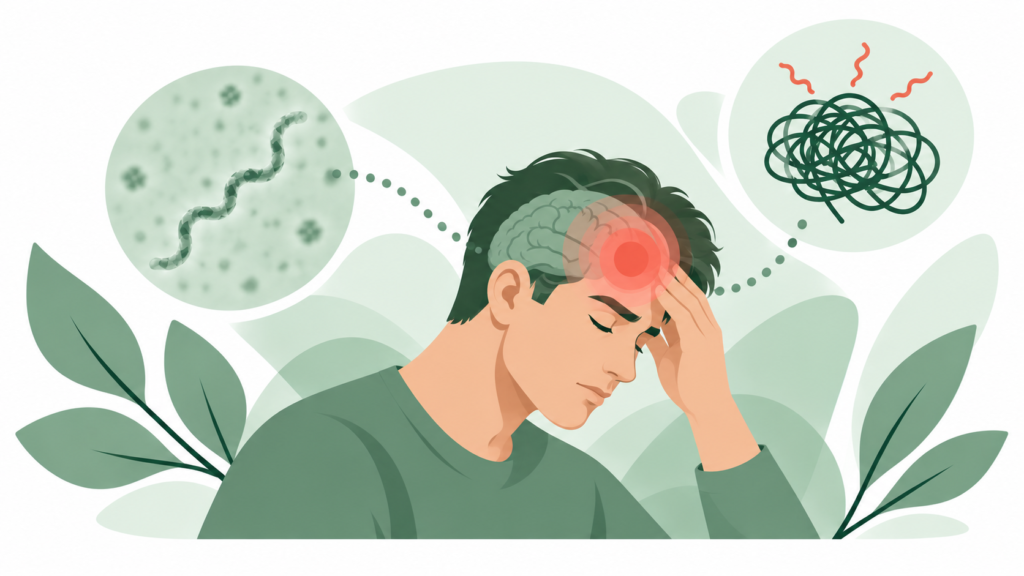
Lyme disease brain fog refers to difficulties with memory, concentration, mental clarity, and information processing that some people experience during Lyme disease or after treatment. These cognitive symptoms can make everyday activities, including reading, working, and holding conversations, more challenging.
Although the exact causes of persistent brain fog are not fully understood, factors such as disrupted sleep, fatigue, pain, and neurological complications may contribute. Understanding these potential causes can help people identify appropriate ways to manage their symptoms.
This guide explains what Lyme disease brain fog feels like, what research suggests about its causes, how long symptoms may last, and which management strategies may help.
Affiliate disclosure: LymeSearch may earn a commission when readers buy products through some links on our website. Commissions do not determine how we describe the evidence for any supplement or test. Read our Affiliate Disclosure.
What does Lyme disease brain fog feel like?
Lyme disease brain fog can feel like difficulty thinking clearly, remembering information, or concentrating on everyday activities.
People describe these cognitive difficulties in different ways. Some experience occasional forgetfulness, while others find that tasks requiring sustained attention become unusually exhausting.
Commonly reported experiences include:
- Forgetting words, names, appointments, or recent conversations.
- Difficulty concentrating while reading or working.
- Taking longer to process information.
- Losing track of thoughts during conversations.
- Feeling overwhelmed when multitasking.
- Difficulty remembering instructions.
- Mental exhaustion after prolonged concentration.
For example, someone may read the same paragraph several times without remembering its contents. Another person may struggle to follow conversations in a noisy environment.
These symptoms can affect productivity, relationships, and quality of life.
Brain fog versus cognitive impairment
There is an important distinction between experiencing brain fog and having objectively measurable cognitive impairment.
Subjective cognitive symptoms describe difficulties a person notices in everyday life.
Objective cognitive impairment refers to difficulties identified through standardized testing of memory, attention, processing speed, or other cognitive abilities.
The two do not always correspond. A person may experience significant everyday difficulties despite performing within expected ranges on formal testing.
Research involving people with persistent symptoms attributed to Lyme disease has demonstrated this distinction. [2] [3]
What causes brain fog in Lyme disease?
The exact causes of Lyme disease brain fog are not fully understood. Cognitive symptoms may develop through several overlapping mechanisms rather than a single cause.
Neurological complications of Lyme disease
Lyme disease is caused by bacteria belonging to the Borrelia burgdorferi group and is transmitted through infected ticks.
In some cases, the infection affects the nervous system, producing neurological Lyme disease, also called Lyme neuroborreliosis.
Recognized neurological complications include facial nerve palsy, nerve pain, meningitis, and certain other nervous system manifestations.
The CDC notes that neurological Lyme disease can produce symptoms such as numbness, weakness, severe headaches, and neck stiffness. [4]
These complications require appropriate medical evaluation and treatment.
However, experiencing brain fog does not automatically mean someone has neurological Lyme disease.
Immune responses and inflammation
The immune system responds to Lyme infection by activating inflammatory pathways intended to help control the bacteria.
Researchers have investigated whether immune-related changes may contribute to prolonged symptoms after treatment.
However, the biological mechanisms responsible for persistent cognitive complaints remain uncertain.
It would be inaccurate to assume that ongoing inflammation explains every case of Lyme-related brain fog.
For additional background, read our guide to chronic inflammation and Lyme disease .
Sleep disturbances
Poor sleep can affect attention, memory, reaction time, and mental clarity.
Someone experiencing Lyme-related fatigue, pain, or disrupted sleep may notice that concentrating becomes more difficult.
Insomnia, irregular sleep schedules, and conditions such as sleep apnea can also contribute to daytime cognitive symptoms.
Because sleep problems are potentially treatable, they deserve attention during an evaluation of persistent brain fog.
Fatigue and pain
Fatigue frequently accompanies Lyme disease and is among the symptoms reported by people experiencing prolonged difficulties after treatment.
Severe fatigue can make sustained concentration more demanding.
Persistent pain may also interfere with sleep, attention, and everyday functioning.
When fatigue, pain, and cognitive symptoms occur together, it may be difficult to determine how much each contributes to the overall experience.
Learn more in our guide to Lyme disease fatigue .
Other medical conditions
Not every cognitive symptom occurring after Lyme disease is necessarily caused by Lyme disease.
Other potential contributors include:
- Thyroid disorders.
- Vitamin B12 deficiency.
- Iron-deficiency anemia.
- Sleep disorders.
- Depression or anxiety.
- Medication side effects.
- Other neurological or medical conditions.
Identifying these contributors matters because some can be treated directly.
The CDC recommends evaluating alternative explanations for prolonged symptoms following Lyme disease treatment. [1]
Does Lyme disease brain fog show up on cognitive tests?
Sometimes. Research suggests that some people with persistent Lyme-related symptoms demonstrate measurable cognitive difficulties, while others do not.
A 2019 study published in Archives of Clinical Neuropsychology evaluated 124 people meeting research criteria for post-treatment Lyme disease syndrome.
Researchers reported that 92% of participants described cognitive difficulties.
However, standardized testing produced different findings:
- 50% showed no significant cognitive decline.
- 26% demonstrated significant decline in certain cognitive measures, particularly memory and sometimes processing speed.
- 24% were excluded from the primary cognitive analyses because of performance-validity concerns.
The researchers identified measurable cognitive decline in a subset of participants, although the findings were not uniform across the group. [2]
A separate 2019 study examined 280 adults with persistent symptoms attributed to Lyme disease.
Objective cognitive impairment was relatively uncommon among participants with valid testing.
Researchers also found no clear association between self-reported cognitive complaints and objectively measured impairment. [3]
These studies have limitations, including differences in participant selection and testing methods.
Importantly, normal cognitive test results do not mean that someone is imagining their symptoms.
Formal testing measures specific abilities under structured conditions. It may not fully capture difficulties that arise during fatigue, prolonged activity, or demanding everyday situations.
When cognitive testing may be helpful
A healthcare professional may recommend neuropsychological testing when symptoms significantly interfere with daily functioning.
Testing can assess areas such as:
- Attention and concentration.
- Short-term and working memory.
- Processing speed.
- Language abilities.
- Executive functioning.
Results may help identify particular difficulties and guide further evaluation or practical accommodations.
Can brain fog continue after Lyme disease treatment?
Yes. Some people continue experiencing difficulty thinking after completing recommended antibiotic treatment for Lyme disease.
The CDC recognizes prolonged fatigue, body aches, and cognitive difficulties among symptoms reported after treatment.
The cause of these prolonged symptoms remains unknown. [1]
What is post-treatment Lyme disease syndrome?
Post-treatment Lyme disease syndrome, or PTLDS, describes a pattern of prolonged symptoms following appropriately treated Lyme disease.
Research definitions commonly require a documented Lyme disease episode, appropriate treatment, and persistent or recurring symptoms lasting at least six months after treatment, with other explanations considered.
Not everyone who experiences brain fog after Lyme disease meets these criteria.
PTLDS remains an active area of scientific investigation.
Does persistent brain fog mean Lyme bacteria are still present?
Persistent cognitive symptoms alone do not establish that an active bacterial infection remains.
Researchers have investigated several possible explanations for prolonged symptoms, but their underlying causes have not been definitively established.
A 2024 systematic review examined randomized trials of additional antibiotic treatment for prolonged symptoms attributed to Lyme disease.
The review found no statistically significant cognitive benefit from antibiotics compared with placebo in the studies assessing cognition.
The evidence had limitations, but additional antibiotics were also associated with more adverse events. [5]
These findings do not change the importance of treating confirmed active Lyme disease appropriately.
People with new objective signs of infection or neurological complications require individualized medical evaluation.
How long does Lyme disease brain fog last?
There is no single recovery timeline for Lyme disease brain fog.
Some people notice cognitive improvement as their infection is treated and associated symptoms resolve.
Others continue experiencing difficulties for months or longer.
The CDC reports that people with prolonged symptoms often improve over time, although recovery can take many months. [1]
However, that observation does not establish how long brain fog will last for any particular person.
Recovery may also be affected by other conditions that influence cognition, including sleep disorders, pain, medication effects, and nutritional deficiencies.
If cognitive symptoms persist, worsen, or interfere with daily life, medical evaluation is appropriate.
How to manage Lyme disease brain fog
Managing Lyme disease brain fog generally involves identifying potentially treatable contributors and reducing the impact of cognitive difficulties on everyday activities.
No single intervention has been proven to eliminate Lyme-related brain fog.
However, several practical strategies may help people function more comfortably while symptoms are being evaluated.
1. Identify potentially treatable causes
A medical evaluation is an important starting point.
A healthcare professional may review symptoms, medical history, medications, sleep quality, and other relevant factors.
Depending on the findings, testing for conditions such as anemia, thyroid disorders, or nutritional deficiencies may be appropriate.
For example, someone with a vitamin B12 deficiency may experience neurological symptoms unrelated to an ongoing Lyme infection.
Treating an identified deficiency addresses that particular problem, although it may not resolve every cognitive complaint.
The goal is to avoid attributing all symptoms to Lyme disease when another treatable condition may be contributing.
2. Improve sleep quality
Sleep plays an important role in attention, learning, and memory.
Poor sleep may make existing cognitive symptoms more noticeable.
The National Heart, Lung, and Blood Institute recommends several habits that can support healthier sleep. [6]
- Maintain consistent sleeping and waking times.
- Keep the bedroom dark, quiet, and comfortable.
- Limit caffeine close to bedtime.
- Reduce stimulating activities before sleep.
- Establish a relaxing evening routine.
People experiencing persistent insomnia, loud snoring, or excessive daytime sleepiness may benefit from evaluation for a sleep disorder.
Improving sleep is not a proven cure for Lyme-related brain fog, but it may address an important contributing factor.
3. Pace mentally demanding activities
Mental pacing involves organizing activities to avoid excessive cognitive strain.
Instead of completing several demanding tasks without interruption, divide them into manageable periods.
For example, someone struggling with concentration might work on one task for a short period, take a break, and return when ready.
The appropriate duration depends on individual tolerance.
Some people may find that even brief periods of concentration worsen their symptoms.
The CDC discusses pacing for people with myalgic encephalomyelitis/chronic fatigue syndrome (ME/CFS), particularly those experiencing symptom worsening after physical or mental exertion.
The CDC also suggests that certain ME/CFS management strategies may be useful for people with prolonged symptoms following Lyme disease. [1] [7]
These approaches are supportive strategies, not established treatments for Lyme-related cognitive dysfunction.
4. Use memory aids
Memory aids can reduce the need to remember every task or appointment without assistance.
Practical options include:
- Smartphone reminders.
- Daily checklists.
- Calendar notifications.
- Written instructions.
- Notes during important conversations.
- Keeping commonly used belongings in consistent locations.
For example, someone who frequently forgets appointments could use a calendar with reminders scheduled the day before and shortly before each appointment.
Someone who struggles with instructions may benefit from writing down the steps before beginning a task.
These tools do not directly treat the underlying cause of brain fog.
However, they can help people manage everyday responsibilities while experiencing cognitive difficulties.
5. Reduce unnecessary multitasking
Multitasking can become particularly difficult when attention and processing speed are affected.
Completing one activity at a time may make tasks easier to manage.
For example, reading in a quiet room may be less demanding than reading while listening to conversations or watching television.
Other approaches include reducing background distractions and allowing additional time for complex activities.
The CDC recommends similar strategies for certain cognitive difficulties associated with ME/CFS. [7]
6. Address fatigue and pain
Fatigue and pain may contribute to the overall burden of cognitive symptoms.
Managing these symptoms can therefore be an important part of a broader care plan.
A healthcare professional may help identify contributing conditions and discuss appropriate treatment options.
Activity should be adjusted to individual tolerance, especially when exertion causes delayed symptom worsening.
Trying to compensate for a better day by completing excessive activity may worsen symptoms in people who experience post-exertional malaise.
7. Address mood-related symptoms when present
Anxiety and depression can affect concentration, sleep, motivation, and memory.
These conditions may also occur alongside persistent physical illness.
Seeking treatment for mood symptoms does not mean that cognitive complaints are imaginary or exclusively psychological.
It means addressing another factor that may influence daily functioning.
8. Discuss persistent problems with a healthcare professional
Some people may benefit from evaluation by a neurologist, neuropsychologist, or another appropriate specialist.
This is particularly relevant when cognitive symptoms are worsening or significantly interfere with work, school, driving, or independent activities.
A specialist may help determine whether additional testing or accommodations are appropriate.
Supplements for Lyme disease brain fog: What the evidence shows
Certain vitamins, minerals, and fatty acids are important for normal neurological function.
Because brain fog involves memory and concentration, some people consider supplements as part of their symptom-management approach.
The important distinction is between correcting a nutritional problem and treating Lyme-related brain fog itself.
Correcting a deficiency can improve symptoms caused by that deficiency.
However, research demonstrating a nutrient’s importance for normal brain function does not automatically establish that taking additional amounts will improve cognition.
Evidence specifically supporting supplements for Lyme-related brain fog remains insufficient.
Vitamin B12
Vitamin B12 is essential for neurological function, red blood cell formation, and several important metabolic processes.
Deficiency can cause fatigue, neurological symptoms, and cognitive difficulties.
Can vitamin B12 help brain fog?
Vitamin B12 supplementation can be beneficial when someone has a deficiency contributing to their symptoms.
Correcting that deficiency is established medical care.
However, this does not mean taking additional vitamin B12 improves cognition in people whose B12 levels are already adequate.
Research involving older adults has generally not demonstrated consistent cognitive improvements from B-vitamin supplementation in the absence of a relevant deficiency. [10]
There is insufficient evidence that vitamin B12 supplements specifically improve Lyme-related brain fog.
Who might benefit?
People with confirmed deficiency or certain conditions affecting vitamin B12 absorption may require treatment.
Some medications, including metformin and certain acid-reducing medicines, can affect B12 status.
Testing and treatment decisions should be guided by a healthcare professional.
Bottom line: Vitamin B12 may help correct cognitive or neurological symptoms caused by deficiency, but it is not an established treatment for Lyme-related brain fog.
Omega-3 fatty acids
Omega-3 fatty acids are involved in normal cellular function.
Docosahexaenoic acid (DHA), one type of omega-3 fatty acid, is an important structural component of the brain.
Omega-3s are found in foods such as fatty fish and are also available as supplements.
Can omega-3 supplements improve cognition?
Some observational research has associated fish consumption with better cognitive outcomes.
However, results from supplement trials have been less consistent.
In the large AREDS2 trial, omega-3 supplementation did not significantly slow cognitive decline in older adults compared with placebo. [8]
Other studies have investigated omega-3 supplementation in populations with different cognitive conditions, but results cannot be directly applied to Lyme disease.
There is insufficient evidence that omega-3 supplements improve brain fog associated with Lyme disease or PTLDS.
Safety considerations
Fish oil supplements may cause gastrointestinal symptoms and can interact with certain medications.
People taking anticoagulants or other medications should discuss supplementation with their healthcare professional.
Bottom line: Omega-3 fatty acids are important nutrients, but their biological role does not establish that supplements relieve Lyme-related cognitive symptoms.
Magnesium
Magnesium is involved in hundreds of biochemical processes, including energy metabolism and normal nerve and muscle function.
Because of its neurological roles, researchers have investigated whether magnesium supplementation influences aspects of cognitive function.
Can magnesium help brain fog?
Magnesium is necessary for normal nervous system function.
Correcting magnesium deficiency is medically important.
However, research on magnesium supplementation for cognitive enhancement remains limited.
Some small studies have examined magnesium L-threonate and cognitive outcomes, but these findings require further confirmation.
They do not establish that magnesium treats Lyme disease brain fog.
Magnesium and doxycycline
Magnesium supplements can interfere with the absorption of certain antibiotics, including doxycycline.
The NIH Office of Dietary Supplements advises separating these antibiotics from magnesium-containing supplements because taking them together can reduce antibiotic absorption. [9]
People taking doxycycline should ask their pharmacist about the correct timing for their specific medication and supplement.
Excessive supplemental magnesium can also cause diarrhea and abdominal discomfort.
Bottom line: Magnesium supports normal neurological function, but there is insufficient evidence that supplementation improves Lyme-related brain fog in people without a deficiency.
Vitamin D
Vitamin D contributes to calcium regulation, bone health, and other physiological processes.
Researchers have also investigated relationships between vitamin D status and neurological health.
However, associations between vitamin D levels and cognitive outcomes do not establish that supplementation improves brain fog.
People with confirmed vitamin D deficiency may benefit from appropriate treatment for that deficiency.
There is insufficient evidence to recommend vitamin D supplements specifically for Lyme-related cognitive symptoms.
Iron
Iron is essential for oxygen transport and normal physiological function.
Iron-deficiency anemia can cause fatigue and may contribute to problems with attention or mental performance.
When iron deficiency is confirmed, treatment may improve symptoms related to the deficiency.
However, taking iron without an established need can cause adverse effects.
Iron supplementation should be based on appropriate medical evaluation rather than brain fog alone.
How to choose supplements responsibly
Before purchasing a supplement for cognitive symptoms, consider whether there is a documented nutritional deficiency or another clear reason for taking it.
A practical approach includes:
- Discussing symptoms with a healthcare professional.
- Considering appropriate testing when deficiency is suspected.
- Reviewing possible medication interactions.
- Checking supplement ingredients and amounts.
- Avoiding products that claim to cure Lyme disease or eliminate persistent infection.
Independent quality-testing programs may provide information about product quality, but quality certification does not prove clinical effectiveness.
For additional information, visit the LymeSearch supplements guide .
When should you seek medical attention?
Persistent or worsening cognitive symptoms deserve medical attention, particularly when they interfere with everyday activities.
Contact a healthcare professional if you experience:
- New or progressively worsening memory difficulties.
- Concentration problems affecting work or school.
- Cognitive symptoms accompanied by persistent fatigue.
- Significant changes in sleep, mood, or daily functioning.
- New neurological symptoms following a tick bite.
- Cognitive difficulties that continue after Lyme disease treatment.
Seek emergency medical care for sudden confusion, difficulty speaking, new one-sided weakness, or other possible stroke symptoms.
A severe headache with fever or neck stiffness also requires urgent medical evaluation.
These symptoms should not automatically be attributed to Lyme disease.
Frequently asked questions
Is brain fog a symptom of Lyme disease?
Yes. Some people with Lyme disease report difficulties with memory, concentration, and thinking clearly.
These symptoms can occur during illness or continue after treatment.
However, brain fog has several possible causes and is not specific to Lyme disease.
Can Lyme disease cause memory problems?
Some people with Lyme disease or prolonged symptoms following treatment report memory difficulties.
Research has identified measurable memory-related changes in certain groups, although findings vary between studies.
Persistent or worsening memory problems should be evaluated by a healthcare professional.
Does Lyme disease brain fog mean the infection is still active?
No. Brain fog alone does not establish the presence of an active Lyme infection.
The causes of prolonged symptoms after treatment remain uncertain.
Medical evaluation is needed when there are signs suggesting active infection, another neurological condition, or a separate medical problem.
Can Lyme disease brain fog become permanent?
There is no reliable way to predict the duration of cognitive symptoms for an individual.
Many people with prolonged symptoms improve over time, but recovery can take months, and some experience longer-lasting difficulties.
Persistent symptoms should not be ignored.
Can sleep problems make Lyme disease brain fog worse?
Poor sleep can contribute to difficulties with attention, memory, and concentration.
Identifying and treating sleep problems may help reduce their contribution to cognitive symptoms.
Can supplements improve Lyme disease brain fog?
Supplements may help address symptoms caused by certain nutritional deficiencies.
However, there is insufficient evidence that vitamin B12, omega-3 fatty acids, magnesium, or other supplements specifically treat Lyme-related brain fog.
Should I see a neurologist for Lyme disease brain fog?
A neurologist or another specialist may be appropriate when cognitive symptoms are significant, worsening, or accompanied by other neurological problems.
A primary care professional can help determine whether specialist evaluation is necessary.
The takeaway
Lyme disease brain fog describes problems with memory, concentration, and mental clarity that some people experience during or after Lyme disease.
Persistent cognitive symptoms are recognized, but their underlying causes are not fully understood.
Cognitive complaints do not always correspond to measurable impairment on formal testing.
Sleep problems, fatigue, medications, and nutritional deficiencies may contribute to cognitive difficulties.
Practical approaches such as pacing, memory aids, and sleep management may help reduce the impact of symptoms.
Correcting nutritional deficiencies can be beneficial when those deficiencies contribute to symptoms.
No supplement has been established as an effective treatment specifically for Lyme-related brain fog.
Persistent or worsening symptoms should be evaluated by a healthcare professional.
For more information, explore our Lyme disease symptoms guides or read about chronic inflammation and Lyme disease .
References
- CDC: Chronic Symptoms and Lyme Disease
- Touradji P, et al. Cognitive Decline in Post-treatment Lyme Disease Syndrome. Archives of Clinical Neuropsychology. 2019.
- Cognitive impairments in patients with persistent symptoms attributed to Lyme disease. BMC Infectious Diseases. 2019.
- CDC: Clinical Care and Treatment of Neurologic Lyme Disease
- Dersch R, et al. Treatment of post-treatment Lyme disease symptoms: A systematic review. European Journal of Neurology. 2024.
- National Heart, Lung, and Blood Institute: Insomnia Treatment
- CDC: ME/CFS Clinical Care and Symptom Management
- NIH Office of Dietary Supplements: Omega-3 Fatty Acids
- NIH Office of Dietary Supplements: Magnesium
- NIH Office of Dietary Supplements: Vitamin B12